

November 26, 2025
JEANS
There may be no other symbol that better represents American culture than denim jeans. Globally, the jeans market was valued at almost $100 billion the past several years, and is expected to approach $130 billion in the next three years. But the origin of denim is not American, and its popularity around the world was definitely engineered.
Denim was officially invented in the 1600s in a small French city named Nîmes. Weavers developed a durable fabric that came to be called "serge de Nîmes." A similar, popular cotton fabric was developed in Genoa, Italy, referred to by the French name for Genoa, "Gênes." So these two European locations provided the origins of the English words "denim" and "jeans" before the United States was even an idea. Both fabrics were dyed with an Indian shrub extract known as indigo, giving them a distinct blue color. The first reference to the fabric in the American colonies appears in 1723, describing the clothing of a runaway sailor as "serge denim breeches."
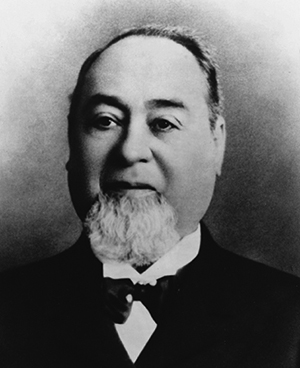
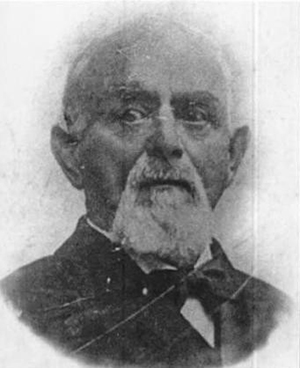
Levi Strauss, a German immigrant, arrived in the United States at age 18 in 1847 and began selling fabrics and dry goods from his older brothers' established business in New York City. During the California gold rush, Levi moved to San Fransisco to sell his brothers' goods to a burgeoning market. One of his customers, Jacob Davis, a Russian immigrant, had invented a more durable work trouser by adding rivets to the seams of the strongest fabric he could find, denim. Jacob approached Levi for help in securing a patent for his invention. In 1873, Levi Strauss & Company received its patent for "improvements in fastening pocket-openings." They didn't invent denim; they didn't invent work pants; they just added rivets. And they began marketing.
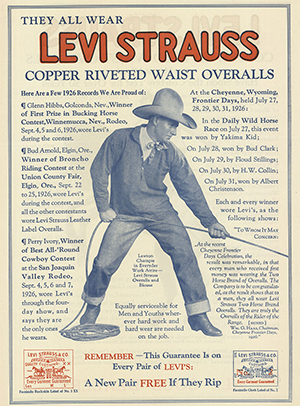
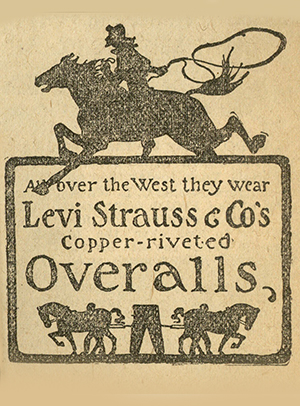
Levi Strauss & Company focused its marketing on the working class of Western United States. In the 1920s, the company began showcasing images of cowboys in denim jeans to illustrate "Western wear." While those advertisements didn't immediately expand sales all over ranches in the country, they had a profound effect on another nearby area: Hollywood. Westerns became popular movies, and all Hollywood cowboys wore jeans. By the 1930s, when the Great Depression made it impossible for the working class to purchase new denim workwear, denim companies began targeting middle-class Americans on the east coast. Hollywood's romanticizing of cowboys created a "dude ranch" tourism industry, and those ranches adopted the denim look from the movies. Middle-class tourists eagerly purchased jeans in order to look the part during their vacation, and the clothing became a more popular casual wear across the country.
By the 1950s, jeans were established as the cool, counter-culture clothing by movies like The Wild One and Rebel Without a Cause. When universities began banning the garments as subversive and inappropriate, more young people wanted to wear them. American servicemen overseas popularized jeans by wearing them during leave, and by the 1980s, the garment that began as durable clothing for lower class workers had become a symbol of equality and democracy that all people could comfortably wear. In that way, jeans have become one of the most iconic symbols of America.
The largest jeans manufacturer, Levi Strauss & Company, reached its highest total sales this year at over $4.5 billion, up 7% from last year. Shares of the company are up over 30%. And the global desire for jeans seems to only be growing.
SOURCES
- "The Blue Jean Birthday Story: How It Started, How It’s Going Globally" from Cotton Incorporated
- "How Blue Jeans Began — And Then Conquered US Closets" from History
- "Improvement in Fastening Pocket-Openings" from Directory of American Tool and Machine Patents
- "How Jeans Conquered the World" from BBC
- "Outfitting the West: The Heritage of Levi Strauss & Co.’s Original Western Wear" from Levi Strauss & Company
- "Round ‘Em Up: A History of Levi’s® in Hollywood Westerns" from Levi Strauss & Company
- "Denim is Having a Moment: Why Jeans are the Hottest Trade in the Retail World" from Yahoo Finance
- All images are public domain
LISTEN

SUBSCRIBE


