
January 24, 2026
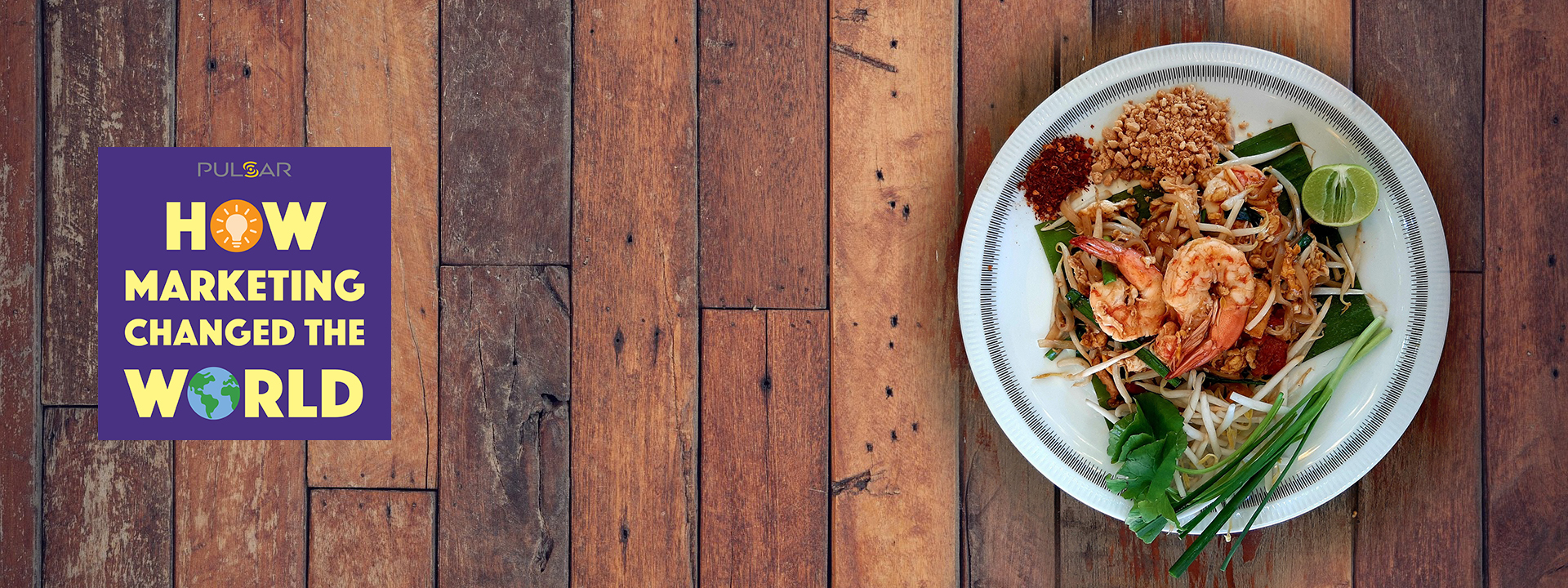
PAD THAI
According to a recent study, Thai cuisine is third most popular ethnic food in the United States, behind Chinese and Mexican. In 2023, there were approximately 340,000 people in the United States that identified as Thai. There were also over 10,000 Thai restaurants in the US, making Thai cuisine the highest population-to-restaurant ratio in the country. And the most iconic food on any Thai menu is pad thai. Yes, the dish is unique and appealing to consumers all over the world, but that's not an accident. The government of Thailand first marketed the dish to its own people, then successfully sold it to the whole world.
Stir-fry noodle dishes were actually introduced to Thailand by Chinese immigrants in the early 1900s. In the 1940s, widespread flooding damaged Thailand's rice paddies, which led to the government launching a campaign to encourage citizens to eat noodles rather than rice. The prime minister also went one step further in an attempt to create greater national pride and identity. He declared the noodle dish to be Thailand's national dish, and spearheaded a marketing campaign to convince the population to adopt it as a show of patriotism and solidarity. In the 1960s, the Vietnam War brought a larger United States presence to Thailand and the surrounding area, and the government of Thailand was seeking closer relations with the US. That was when the first mention of "pad thai" was recorded. The dish quickly became very popular with US tourists and servicemen.
But that isolated dish in an Asian country did not become synonymous with Thailand until 2002. That year, the government of Thailand started the Global Thai Program. The goal of the program was to increase the number of Thai restaurants around the world by over 50%. Doing so, they believed, would improve the global perception of Thailand, increase demand for Thai cuisine, and expand trade and tourism. The mechanisms to accomplish this centered around helping Thai immigrants to establish restaurants, lobbying to make importing Thai ingredients cheaper, and extending special loans for restaurant entrepreneurs. And it was wildly successful.
In 2002, there were about 5500 Thai restaurants outside of Thailand, and less than 2000 in the United States. By 2008, there were about 13,000 Thai restaurants worldwide. Today, there are almost 20,000, an over threefold increase in 24 years. So the Thai government exceeded its goals, increasing the number of Thai restaurants worldwide by over 260%, and in the US by almost 400%. The United States is currently home to the most Thai restaurants in the world outside of Thailand.
Thailand has been cited as the first country in the world to officially sanction a gastrodiplomacy program, a term coined in 2002 to describe Thailand's global marketing efforts. But due to its success, other countries like Japan, South Korea, Taiwan, and Peru have followed suit. Even the United States joined the trend with its Diplomatic Culinary Partnership in 2023. But no other country has seen the level of success achieved by Thailand. Since its Global Thai Program, the country has seen its gross domestic product increase by 290%, and its tourism increase by 160%. For almost ten years running, Bangkok, the capital of Thailand, has been the most visited city in the world. And even if it's just for a brief layover, international visitors to Bangkok are probably ordering pad thai.
SOURCES
- "New Study Reveals Most Popular Cuisines in America" from QA
- "Facts about Thai in the U.S." from Pew Research Center
- "71% of Asian Restaurants in the U.S. Serve Chinese, Japanese or Thai Food" from Pew Research Center
- "The Surprising History of Pad Thai" from Smithsonian
- "The Surprising Reason that There Are So Many Thai Restaurants in America" from Vice
- "The Origins of Thailand's Gastrodiplomacy" from Faculty of Political Science, Thammasat University, Thailand
- "Serving Diplomacy on a Plate: How Thailand’s Gastrodiplomacy Spreads Influence through Pad Thai" from Georgia Political Review
- "Diplomatic Culinary Partnership" from U.S. Department of State
- "There's a Reason Why There Are So Many Thai Restaurants in the U.S." from VinePair
- "World's Top 100 Cities Revealed" from CNN
LISTEN

SUBSCRIBE


